
Gleaning is the collection of marine invertebrates within the intertidal mudflats for subsistence and small domestic markets.
Gleaning is conducted mainly by women in Tonga, providing not just food source but economic support, social engagement and recreation. Women rarely are alone in the gleaning areas and often share and trade species as they glean. These interactions are also key to understanding the role that gleaning plays within the family and community settings.
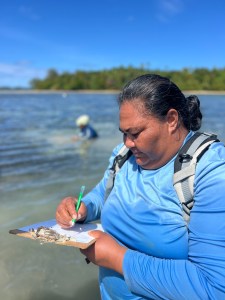
The nutritional value of shellfish and invertebrates would be much better than the corned beef and lamb flaps in the shop, yet the effort by women is much higher to gather enough shellfish and invertebrates to provide for families to eat. So how can we help ensure that the environment is healthy and adapt to changes that occur?
Through the Waitt Institute support, we are exploring the environmental condition, key species and impacts from climate change in 5 communities in Vava’u. The work has included initial surveys with women in each community to ensure understanding of the program, activities and outputs and to gather basic knowledge on social needs, habitats, species and climate knowledge.
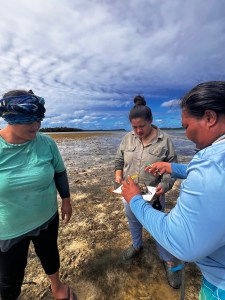
Over the next 6 months we will be working with each of the 5 communities to understand any issues in the intertidal, understand their efforts and knowledge in the field and to look towards 5 small programs to enhance the habitat and promote healthy coastal areas. We will learn from them in their space and identify ways to support and sustain their activities.
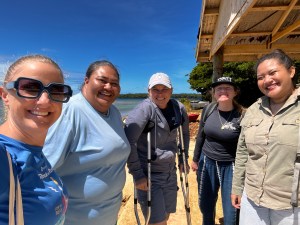
We are very grateful to the women and communities that share and explore their environment and issues with us.

 Vava'u Environmental Protection Association (VEPA)
Leave a comment